

There’s something special about autumn in Ireland. The evenings draw in, the fire goes on, and suddenly there’s every excuse to invite a few friends or family around for good food and a long evening at the table.
With the October bank holiday weekend approaching and Halloween just around the corner, it’s the perfect time to celebrate the incredible food being produced right here in Ireland.
From the orchards harvesting their autumn apples to the farms growing pumpkins, squash and beetroot, this is a wonderful time of year for Irish produce. Add the work of our cheesemakers, mushroom growers, beekeepers and independent food producers, and there’s no shortage of inspiration for the kitchen.
At Cheese.ie, we believe Irish producers deserve to be celebrated. Not just the names everyone knows, but the smaller growers and makers producing wonderful food in every corner of the country.
And what better way to celebrate them than by bringing their produce together?
We’ve put together 12 seasonal recipes featuring Irish cheeses from our collection, paired with the flavours of the autumn harvest. Some are perfect for a Halloween party, others for a relaxed dinner with friends, and a few are simply too good not to make on a cold evening.
Along the way, we’ll introduce you to the Irish producers behind the ingredients, explain why the flavours work so well together, and suggest a wine or non-alcoholic drink to complete each dish.
So whether you’re hosting a houseful this Halloween or planning something a little quieter over the bank holiday weekend, there’s plenty of inspiration here to make the most of Ireland’s autumn harvest.
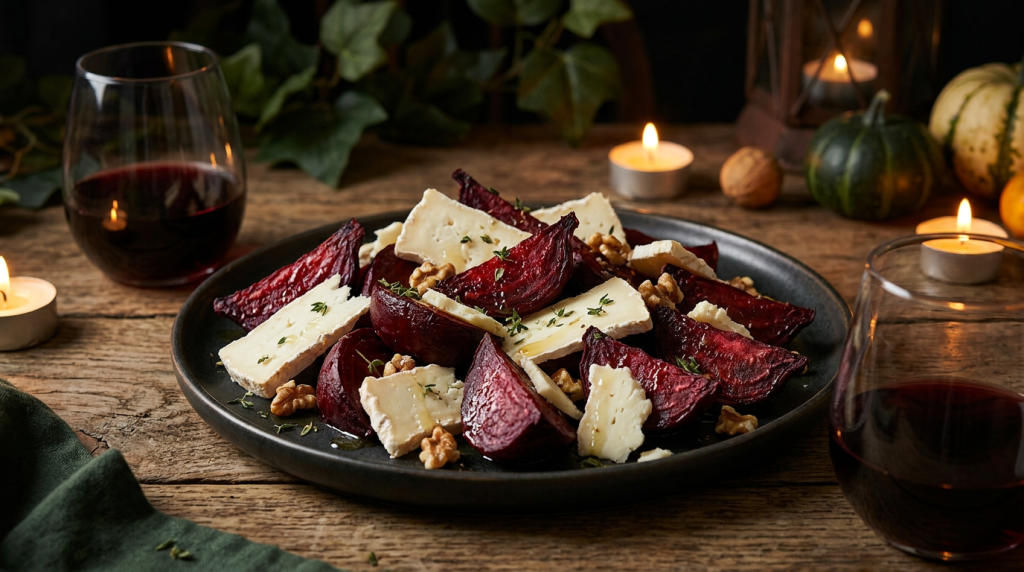
1. Roasted Irish Beetroot with Cnoc Liatroma, Thyme & Honey
There’s something wonderful about the combination of earthy roasted beetroot, creamy goat’s cheese and a drizzle of golden honey. It’s a colourful, flavour-packed dish that brings together some of Ireland’s finest autumn ingredients.
Perfect as a starter for an autumn dinner party or as part of a Halloween sharing table, it’s surprisingly simple to prepare and looks beautiful when served.
Celebrating Irish Cheese: Cnoc Liatroma, Co. Leitrim
Our featured cheese is Cnoc Liatroma, produced by Leitrim Hill Creamery in County Leitrim.
Made from goat’s milk, this Irish cheese brings a distinctive tangy character that complements the natural sweetness of roasted beetroot.
As beetroot roasts, its earthy flavours become sweeter and more concentrated. The goat’s cheese provides a creamy contrast, while honey adds gentle sweetness and thyme brings a fragrant, savoury finish.
It’s a lovely example of how a handful of ingredients can work together without needing anything complicated.
Ingredients
Serves 4 as a starter
500g Irish-grown beetroot
150g Cnoc Liatroma goat’s cheese
2 tablespoons Irish honey
2 tablespoons extra virgin olive oil
4 sprigs fresh thyme
40g toasted walnuts
Sea salt and freshly ground black pepper
Method
Preheat your oven to 200°C (180°C fan).
Wash and peel the beetroot, then cut into evenly sized wedges.
Arrange on a roasting tray, drizzle with olive oil and season with salt, pepper and thyme.
Roast for 35 to 45 minutes, turning halfway through, until tender and lightly caramelised.
Transfer the warm beetroot to a serving platter.
Add pieces of Cnoc Liatroma over the beetroot, allowing the warmth to soften the cheese slightly.
Drizzle with Irish honey, scatter over the toasted walnuts and finish with a little fresh thyme.
Serve while the beetroot is still warm.
What to Drink
Wine pairing: Sauvignon Blanc
A crisp, dry Sauvignon Blanc brings refreshing acidity that complements the tang of goat’s cheese while balancing the sweetness of the beetroot and honey.
Non-alcoholic pairing: Irish Cloudy Apple Juice
A chilled, unsweetened Irish cloudy apple juice provides gentle fruitiness and refreshing acidity. Its natural apple flavour works beautifully with the earthy beetroot and creamy cheese.
Bringing Ireland to the Table
This dish is an opportunity to celebrate Irish cheese alongside seasonal beetroot and honey produced here at home.
For the freshest ingredients, look to Irish growers such as McNally Family Farm in North County Dublin, known for their organic seasonal vegetables, including beetroot.
For the honey, Molaga Honey in West Cork offers 100% Irish honey, providing a natural sweetness that complements the tangy character of Cnoc Liatroma.
Choosing Irish-grown beetroot and genuinely Irish honey makes this a simple celebration of the produce available on our doorstep.
Discover Cnoc Liatroma at Cheese.ie and bring a little more Irish flavour to your autumn table.
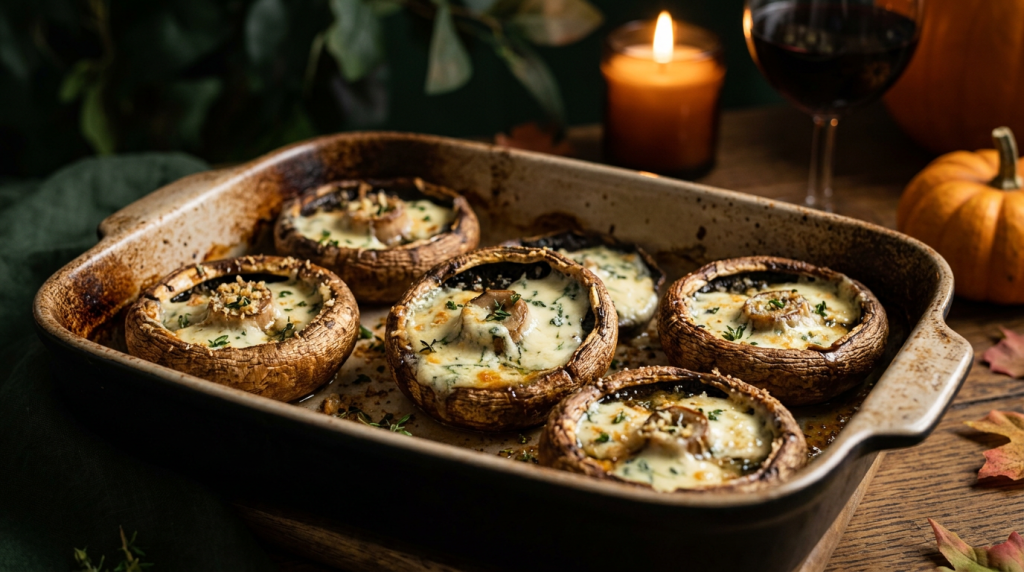
2. Baked Irish Mushrooms with Cashel Blue, Garlic & Fresh Thyme
If you’re looking for something a little different to serve this Halloween, these golden, cheese-filled mushrooms deserve a place on the table.
Earthy Irish mushrooms, rich blue cheese, fragrant thyme and roasted garlic come together in a wonderfully comforting dish. They’re simple enough to prepare ahead of a gathering, yet impressive enough to serve as a starter at an autumn dinner party.
Better still, they bring together two fantastic Irish food traditions: mushroom growing and cheesemaking.
Celebrating Irish Cheese: Cashel Blue, Co. Tipperary
Our featured cheese is Cashel Blue Organic, produced by Cashel Farmhouse Cheesemakers in County Tipperary.
Cashel Blue is known for its creamy texture and distinctive blue cheese character, offering a balance of savoury richness and gentle tang.
Mushrooms are particularly well suited to blue cheese. Their deep, earthy flavours complement the cheese’s savoury character, while their natural moisture helps create a rich, tender filling as everything cooks together.
A little garlic and fresh thyme bring out those flavours without overpowering the cheese.
Ingredients
Serves 4 as a starter
8 large Irish-grown flat mushrooms, approximately 500–600g
150g Cashel Blue Organic
2 cloves garlic, finely chopped
30g Irish butter
1 tablespoon extra virgin olive oil
4 sprigs fresh thyme
40g fresh breadcrumbs
Freshly ground black pepper
A little chopped flat-leaf parsley to finish
Method
Preheat your oven to 190°C (170°C fan).
Gently clean the mushrooms and remove their stalks. Finely chop the stalks and set aside.
Arrange the mushroom caps, hollow side up, on a lightly oiled baking tray.
Melt the Irish butter in a frying pan over medium heat. Add the chopped mushroom stalks, garlic and thyme leaves, cooking for 3 to 4 minutes until softened and most of the moisture has evaporated.
Remove from the heat and stir in the breadcrumbs and a little freshly ground black pepper.
Divide the mixture between the mushroom caps, then crumble Cashel Blue over each one.
Bake for 18 to 22 minutes, until the mushrooms are tender and the cheese has melted into the filling.
Finish with chopped parsley and serve warm.
For a Halloween gathering, smaller Irish-grown mushrooms can also be used to create bite-sized versions. Simply reduce the cooking time and keep an eye on them as they roast.
What to Drink
Wine pairing: Pinot Noir
A light to medium-bodied Pinot Noir offers gentle red fruit flavours and enough acidity to complement the earthy mushrooms without overwhelming the blue cheese. Choose a fruit-forward style with restrained tannins.
Non-alcoholic pairing: Irish Apple & Blackcurrant Juice
A chilled Irish-made apple and blackcurrant drink offers a pleasant balance of sweetness and acidity. The darker fruit flavours complement the mushrooms, while the refreshing finish contrasts with the richness of the cheese.
Bringing Ireland to the Table
Ireland has a thriving mushroom-growing tradition, from familiar flat and chestnut mushrooms to more unusual speciality varieties.
Ballyhoura Mountain Mushrooms in County Limerick is one Irish producer worth discovering, known for its speciality mushrooms and wild mushroom products.
For this particular recipe, large Irish-grown flat mushrooms are ideal because their broad caps hold the cheese filling beautifully. When shopping, check the country of origin to ensure you’re choosing Irish-grown mushrooms.
Combined with Cashel Blue from County Tipperary and Irish butter, this is a comforting autumn dish that puts Irish ingredients firmly in the spotlight.
Discover Cashel Blue Organic at Cheese.ie and give your Halloween guests something deliciously different to enjoy.
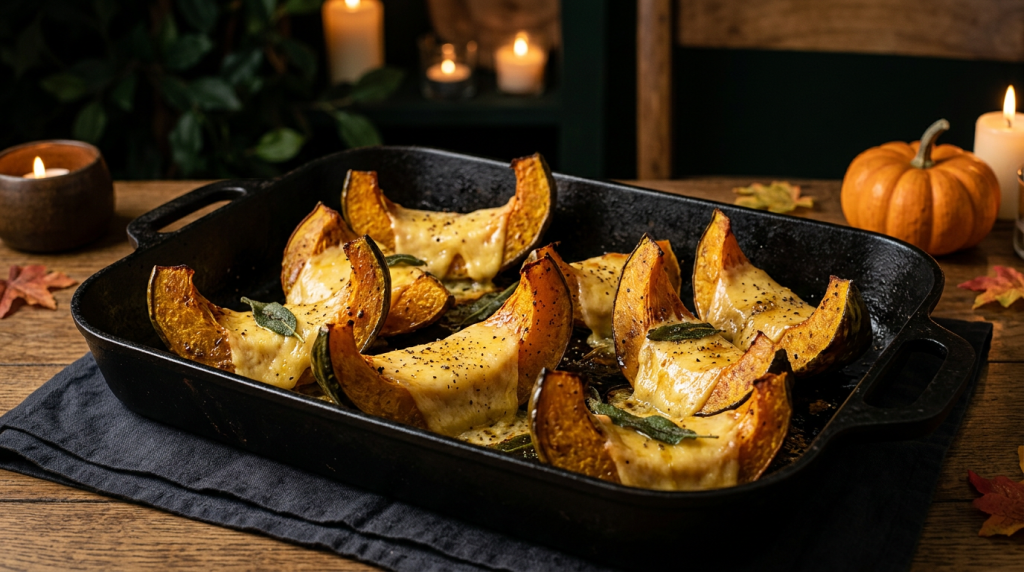
3. Roasted Irish Pumpkin with Mossfield Organic Gouda, Crispy Sage & Toasted Pumpkin Seeds
Pumpkins might be the stars of Halloween decorations, but they deserve just as much attention in the kitchen. Beneath that bright orange skin is a wonderfully versatile autumn vegetable that becomes beautifully sweet and tender when roasted.
This dish brings together Irish-grown pumpkin, rich organic Gouda from County Offaly and fragrant crispy sage. Finished with toasted pumpkin seeds, it’s a colourful, comforting addition to any Halloween gathering or autumn dinner table.
Serve it as a warm sharing dish, alongside a Sunday roast or as part of a larger seasonal spread.
Celebrating Irish Cheese: Mossfield Organic Gouda, Co. Offaly
Our featured cheese is Mossfield Organic Gouda, produced by Mossfield Organic Farm in County Offaly.
Made using organic cow’s milk, Mossfield Gouda has a rich, smooth character with savoury, nutty notes that make it particularly enjoyable with roasted vegetables.
Pumpkin develops a deeper sweetness as it caramelises in the oven. The Gouda introduces a contrasting savoury richness, while sage adds a fragrant, slightly peppery flavour that cuts through the sweetness.
Toasted pumpkin seeds finish the dish with a satisfying crunch.
It’s a combination that celebrates the natural flavours of autumn without needing an elaborate list of ingredients.
Ingredients
Serves 4 to 6 as a sharing dish
1kg Irish-grown culinary pumpkin or winter squash
180g Mossfield Organic Gouda, grated
40g Irish butter
2 tablespoons extra virgin olive oil
12 fresh sage leaves
40g pumpkin seeds
2 cloves garlic, lightly crushed
Sea salt and freshly ground black pepper
Method
Preheat your oven to 200°C (180°C fan).
Wash the pumpkin, remove the seeds and cut the flesh into wedges approximately 2–3cm thick. Peel if the variety requires it.
Arrange the wedges on a large baking tray with the crushed garlic.
Drizzle with olive oil, season with salt and black pepper, and toss gently to coat.
Roast for 30 to 40 minutes, turning halfway through, until the pumpkin is tender and the edges are beginning to caramelise.
While the pumpkin roasts, toast the pumpkin seeds in a dry frying pan over medium heat for 2 to 3 minutes, stirring regularly. Set aside.
Melt the Irish butter in a small frying pan. Add the sage leaves and cook briefly until crisp, then remove from the heat.
Transfer the roasted pumpkin to an ovenproof serving dish and scatter the grated Mossfield Gouda over the wedges.
Return to the oven for approximately 5 minutes, until the cheese has melted.
Finish with the crispy sage, a little of the sage butter and the toasted pumpkin seeds.
Serve immediately while the cheese is warm and melted.
What to Drink
Wine pairing: Chardonnay
A lightly oaked Chardonnay works beautifully with this dish. Its rounded texture complements the richness of the Gouda, while its fresh acidity balances the sweetness of the roasted pumpkin.
Look for a Chardonnay with gentle citrus and orchard fruit notes rather than a heavily oaked style.
Non-alcoholic pairing: Irish Sparkling Apple Juice
A chilled sparkling apple juice made with Irish-grown apples offers a refreshing contrast to the melted cheese.
The natural fruit acidity helps balance the richness of the Gouda, while the gentle sweetness complements the roasted pumpkin and sage.
Bringing Ireland to the Table
Pumpkins are closely associated with Halloween, but they’re also part of Ireland’s autumn growing season.
Irish farms such as McNally Family Farm in North County Dublin celebrate seasonal vegetable growing, including the kinds of autumn ingredients that make this time of year so enjoyable for cooking.
When choosing your pumpkin, look for an Irish-grown culinary variety intended for eating rather than a large decorative carving pumpkin. Smaller culinary pumpkins and winter squash generally offer a more concentrated flavour and better texture for roasting.
Paired with Mossfield Organic Gouda from County Offaly and Irish butter, this dish brings together the work of Irish growers, dairy farmers and cheesemakers in one wonderfully seasonal recipe.
Discover Mossfield Organic Gouda at Cheese.ie and bring the flavours of the Irish autumn harvest to your Halloween table.
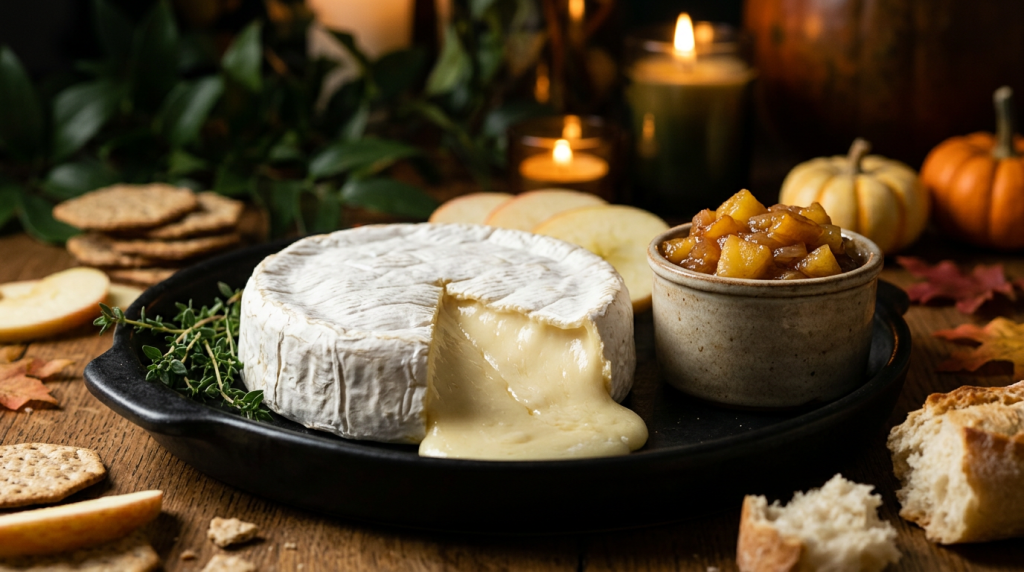
4. Warm Irish Brie with Apple Chutney, Rosemary & Toasted Walnuts
Few things are more inviting on a cold autumn evening than warm, creamy cheese served straight from the oven. Add a generous spoonful of apple chutney, fragrant rosemary and crunchy toasted walnuts, and you have something worth gathering around.
This is the kind of dish that disappears quickly when friends come over. It’s wonderfully simple to prepare, requires very little time in the kitchen and makes an impressive centrepiece for a Halloween gathering or a relaxed evening at home.
Best served warm with crisp crackers and fresh Irish apple slices, it’s a lovely way to celebrate some of the flavours of Ireland’s autumn harvest.
Celebrating Irish Cheese: Wicklow Bán, Co. Wicklow
Our featured cheese is Wicklow Bán, produced by Wicklow Farmhouse Cheese in County Wicklow.
This Irish soft cheese has a delicate, creamy character and a mild, buttery flavour that makes it particularly well suited to fruit-based accompaniments.
The gentle richness of the cheese works beautifully with the sweet and tangy flavours of apple chutney. Rosemary introduces an aromatic savoury note, while toasted walnuts add a little bitterness and crunch.
Together, they create a balance of creamy, sweet, sharp and savoury flavours.
Ingredients
Serves 4 to 6 as a sharing dish
1 whole Wicklow Bán cheese, approximately 150–200g
3 tablespoons Irish-made apple chutney
40g walnuts, roughly chopped
1 small sprig fresh rosemary
1 teaspoon Irish honey, optional
1 crisp Irish-grown eating apple
Water crackers or plain oatcakes, for serving
Freshly ground black pepper
Method
Preheat your oven to 180°C (160°C fan).
Remove all packaging from the Wicklow Bán and place the cheese in a small, shallow ovenproof dish lined with baking parchment.
Warm the cheese in the oven for approximately 8 to 12 minutes, checking regularly. The aim is to soften it gently rather than allow it to collapse completely.
While the cheese warms, toast the walnuts in a dry frying pan over medium heat for 2 to 3 minutes until fragrant.
Finely chop a few rosemary leaves and stir them into the apple chutney.
Remove the cheese from the oven and spoon the chutney over the top.
Scatter over the toasted walnuts and finish with a little freshly ground black pepper.
Add a light drizzle of Irish honey if you prefer a sweeter finish.
Serve immediately with crackers and thin slices of fresh Irish apple.
Serving tip: Wicklow Bán is a soft cheese, and its behaviour when heated will depend on its size and ripeness. Warm it gently and serve it in the baking dish so none of the delicious softened cheese is lost.
What to Drink
Wine pairing: Chenin Blanc
A dry or off-dry Chenin Blanc is an excellent companion to this dish. Its natural acidity refreshes the palate between bites of creamy cheese, while its apple and orchard fruit notes complement the chutney.
A lightly off-dry style works particularly well if the chutney has a sharper, more vinegary character.
Non-alcoholic pairing: Irish Sparkling Apple Juice
A sparkling juice made from Irish-grown apples is a natural choice.
The bubbles and fresh acidity provide a pleasant contrast to the richness of the cheese, while the apple flavour echoes the chutney without overwhelming it.
Bringing Ireland to the Table
Autumn is a wonderful time to celebrate Ireland’s apple harvest, and apple chutney has long been a natural companion to cheese.
Irish producers such as The Clare Jam Company in County Clare make traditional fruit chutneys and preserves, including apple-based varieties that are particularly suited to cheese.
Irish growers also provide an abundance of seasonal apples, from crisp eating varieties to the Bramley cooking apples traditionally used in chutneys and preserves.
For this recipe, choose an Irish-made apple chutney and check the label if you specifically want one made using Irish-grown apples.
Combined with Wicklow Bán from County Wicklow, the result is a simple but delicious celebration of Irish cheesemaking and autumn produce.
Discover Wicklow Bán at Cheese.ie and make your next autumn gathering something worth remembering.
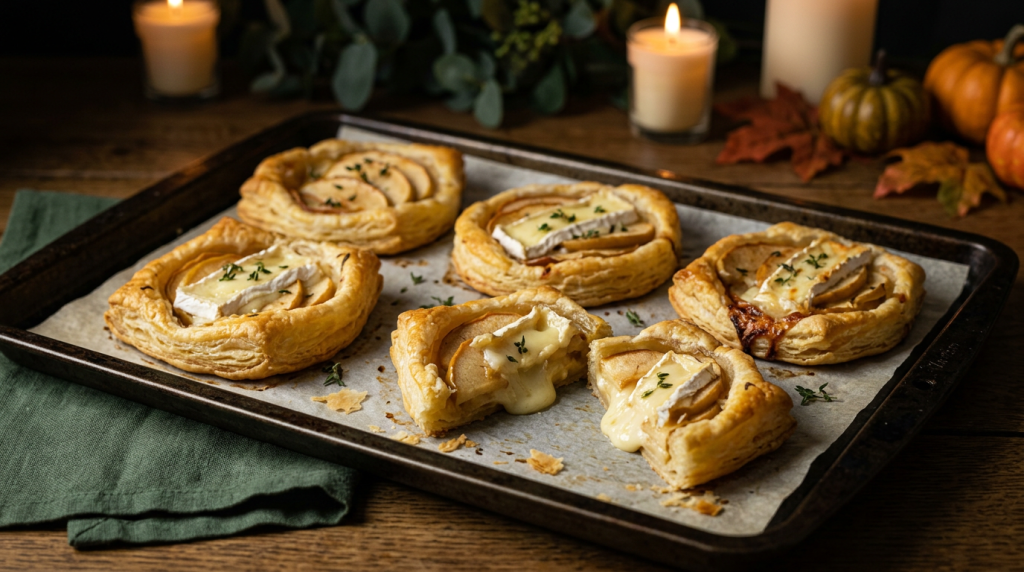
5. Caramelised Irish Apple & Boyne Valley Bán Goat’s Cheese Tartlets
Golden, buttery pastry, sweet caramelised Irish apples and beautifully tangy goat’s cheese. These little tartlets bring together some of the best flavours of autumn in a dish that’s just as suitable for a Halloween party as it is for an elegant dinner with friends.
There’s something particularly satisfying about combining fruit and cheese in savoury cooking. The apples soften and develop a rich sweetness in the oven, while the goat’s cheese provides a delicious contrast that keeps everything beautifully balanced.
Served warm from the oven, these tartlets make wonderful finger food for a gathering. They’re also an excellent starter when accompanied by a small salad of seasonal Irish leaves.
Celebrating Irish Cheese: Boyne Valley Bán, Co. Meath
Our featured cheese is Boyne Valley Bán, produced by Boyne Valley Farmhouse Cheese in County Meath.
Made from goat’s milk, Boyne Valley Bán brings a distinctive tangy flavour and creamy richness to this recipe.
The natural acidity of goat’s cheese works particularly well with sweet fruit. As the Irish apples caramelise, their sugars become more concentrated, creating a lovely contrast with the cheese’s savoury character.
A little fresh thyme adds an aromatic finish, while buttery pastry brings everything together.
Ingredients
Makes 12 small tartlets
150g Boyne Valley Bán goat’s cheese
2 medium Irish-grown eating apples
1 sheet ready-rolled puff pastry, approximately 320g
25g Irish butter
1 tablespoon Irish honey
1 teaspoon fresh thyme leaves
1 small red onion, finely sliced
1 tablespoon extra virgin olive oil
1 free-range Irish egg, beaten
Freshly ground black pepper
A small pinch of sea salt
Method
Preheat your oven to 200°C (180°C fan) and line a large baking tray with parchment paper.
Peel and core the apples, then cut them into thin slices.
Melt the Irish butter in a frying pan over medium heat. Add the apple slices and cook gently for 4 to 5 minutes until beginning to soften.
Drizzle over the Irish honey and cook for another 2 minutes, allowing the apples to become lightly golden. Remove from the pan and set aside.
Add the olive oil and sliced red onion to the same pan. Cook over a low heat for 8 to 10 minutes until soft and lightly caramelised.
Unroll the puff pastry and cut into 12 equal rectangles.
Arrange the pastry pieces on the prepared baking tray, leaving a little space between each one.
Lightly score a border approximately 1cm from the edge of each rectangle, taking care not to cut all the way through.
Divide the softened onion between the pastry pieces, keeping the filling inside the scored borders.
Add a few slices of caramelised apple to each tartlet.
Distribute small pieces of Boyne Valley Bán over the apples and sprinkle with fresh thyme and black pepper.
Brush the exposed pastry borders with beaten egg.
Bake for 15 to 20 minutes, until the pastry is puffed and golden and the cheese is warmed through.
Allow the tartlets to rest for a few minutes before serving.
What to Drink
Wine Pairing: Pinot Gris
A dry Pinot Gris is a lovely companion to these tartlets. Its gentle orchard fruit flavours complement the caramelised apples, while its refreshing acidity balances the richness of the goat’s cheese and buttery pastry.
Choose a fresh, unoaked style that won’t overpower the delicate flavours of the dish.
Non-Alcoholic Pairing: Irish Sparkling Apple & Elderflower
A sparkling apple and elderflower drink, preferably made with Irish-grown apples and Irish elderflower, provides a refreshing accompaniment.
The apple notes echo the filling, while the floral character adds a delicate contrast to the savoury goat’s cheese.
Bringing Ireland to the Table
Ireland’s autumn apple harvest provides wonderful inspiration for seasonal cooking, particularly when combined with the country’s excellent cheeses.
The Apple Farm in County Tipperary is one example of an established Irish fruit grower, producing apples and a range of apple-based products.
Using Irish-grown apples, Irish butter, an Irish free-range egg and Boyne Valley Bán from County Meath gives these tartlets a distinctly Irish character.
They’re also wonderfully versatile. Make smaller versions for a Halloween party, or serve two larger tartlets per person as a starter for an autumn dinner.
Discover Boyne Valley Bán at Cheese.ie and bring together the flavours of Irish orchards and Irish cheesemaking in one delicious seasonal dish.
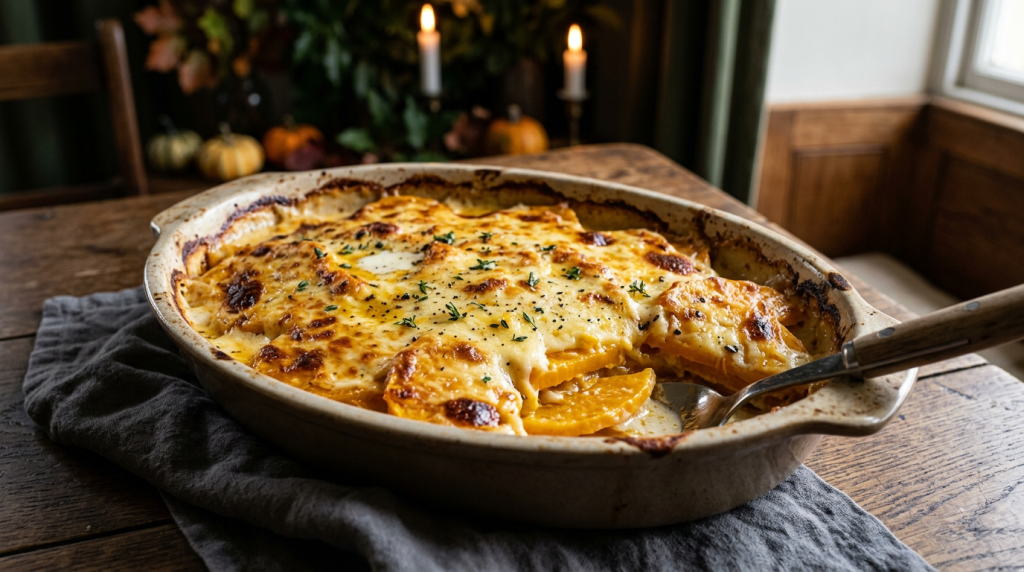
6. Roasted Irish Autumn Squash & Banagher Bold Cheese Gratin
As the evenings grow colder, there’s nothing quite like bringing a bubbling, golden gratin straight from the oven to the dinner table. Rich melted cheese, sweet roasted squash and a crisp, buttery topping make this a particularly comforting dish for an autumn gathering.
This recipe brings together seasonal Irish-grown squash and Banagher Bold, an Irish cheese with a distinctive character that stands up beautifully to the deeper flavours of roasted vegetables.
Serve it as a substantial vegetarian dish, alongside a Sunday roast or as part of a Halloween sharing table. It’s the sort of food that encourages everyone to help themselves to another spoonful.
Celebrating Irish Cheese: Banagher Bold, Co. Derry
Our featured cheese is Banagher Bold, produced by Dart Mountain Cheese in County Derry.
Banagher Bold is an ale-washed cow’s milk cheese, with a distinctive savoury character influenced by its washed rind.
Its rich flavour makes it an interesting companion to the natural sweetness of roasted squash. As the cheese warms, its creamy interior softens, bringing depth and richness to the dish.
The sweetness of the squash helps balance the cheese’s stronger savoury notes, while fresh thyme and a little mustard bring the flavours together.
Ingredients
Serves 4 to 6
800g Irish-grown butternut squash or another culinary winter squash
180g Banagher Bold cheese, rind included if suitable for eating
250ml Irish fresh cream
40g Irish butter
1 small Irish-grown onion, finely sliced
2 cloves garlic, finely chopped
1 teaspoon wholegrain mustard
4 sprigs fresh thyme
50g fresh breadcrumbs
2 tablespoons extra virgin olive oil
Sea salt and freshly ground black pepper
Method
Preheat your oven to 200°C (180°C fan).
Peel the squash, remove the seeds and cut into slices approximately 1cm thick.
Arrange the squash on a baking tray, drizzle with olive oil and season lightly with salt, pepper and thyme.
Roast for 20 to 25 minutes until beginning to soften and develop golden edges.
Meanwhile, melt 20g of the Irish butter in a frying pan over medium heat.
Add the sliced onion and cook gently for 8 minutes until softened. Stir in the garlic and cook for another minute.
Pour in the Irish cream, add the wholegrain mustard and warm gently without boiling.
Cut the Banagher Bold into small pieces. Add approximately two-thirds to the warm cream mixture, stirring gently until softened and partly melted.
Arrange the roasted squash in a shallow ovenproof dish, layering it with the softened onions.
Pour the cheese and cream mixture evenly over the squash.
Scatter the remaining Banagher Bold across the top.
Melt the remaining butter and mix with the breadcrumbs and a few fresh thyme leaves.
Sprinkle the buttery breadcrumbs over the gratin.
Bake for 20 to 25 minutes until bubbling and golden on top.
Allow to rest for 5 minutes before serving.
What to Drink
Wine Pairing: Riesling
An off-dry Riesling is an excellent choice for a rich, washed-rind cheese dish.
Its lively acidity helps refresh the palate, while a little residual sweetness balances the stronger savoury character of the cheese. The wine’s citrus and orchard fruit notes also complement the sweetness of the roasted squash.
Non-Alcoholic Pairing: Irish Cloudy Apple Juice
A chilled Irish cloudy apple juice offers a refreshing contrast to the richness of the gratin.
Choose one with a good balance of sweetness and acidity rather than an overly sweet juice. The natural apple flavours complement the roasted squash while helping balance the creamy cheese sauce.
Bringing Ireland to the Table
Autumn squash is a wonderful ingredient for seasonal cooking, bringing natural sweetness, colour and versatility to the kitchen.
Irish growers such as McNally Family Farm in North County Dublin help showcase the variety of vegetables that can be grown during Ireland’s autumn season.
When shopping for this recipe, look for Irish-grown winter squash and check its origin, as not all squash sold in Ireland is locally produced.
Banagher Bold brings another dimension to the dish, representing cheesemaking in County Derry and the distinctive flavours that can be created through traditional cheese-ripening techniques.
Together with Irish butter, cream and seasonal vegetables, this gratin makes a wonderfully warming addition to the Halloween table.
Discover Banagher Bold at Cheese.ie and enjoy a rich, comforting taste of the Irish autumn harvest.
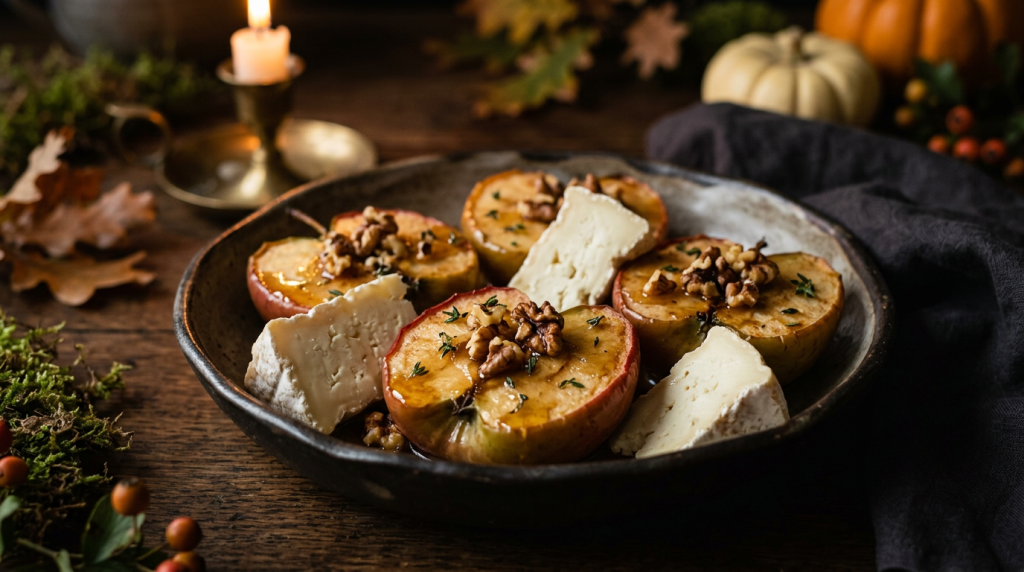
7. Roasted Irish Apples with Corleggy Kid Goat’s Cheese, Honey & Toasted Walnuts
Autumn in Ireland brings an abundance of apples, and while they’re wonderful in pies and crumbles, they’re equally delicious in savoury dishes. Roasted until tender and golden, their natural sweetness makes a beautiful companion to Irish goat’s cheese.
This recipe combines warm orchard apples, Corleggy Kid goat’s cheese, golden Irish honey and toasted walnuts. It’s an elegant little dish that can be served as a starter, an alternative to a traditional dessert or as part of a larger autumn entertaining spread.
With Halloween approaching, it’s also a lovely way to celebrate Ireland’s apple harvest without reaching for the usual sweet treats.
Celebrating Irish Cheese: Corleggy Kid, Co. Cavan
Our featured cheese is Corleggy Kid, produced by Corleggy Cheeses in County Cavan.
Made from goat’s milk, Corleggy Kid brings a distinctive tangy character and savoury depth that contrasts beautifully with the sweetness of roasted apples.
As apples cook, their flesh softens and their natural sugars become more concentrated. The goat’s cheese provides a rich, tangy counterpoint, while Irish honey adds gentle floral sweetness.
Toasted walnuts introduce a pleasant crunch and slight bitterness, bringing balance to every mouthful.
Ingredients
Serves 4
-
4 medium Irish-grown eating apples, preferably a firm variety suitable for baking
-
150g Corleggy Kid goat’s cheese
-
3 tablespoons Irish honey
-
40g Irish butter
-
50g walnuts, roughly chopped
-
1 teaspoon fresh thyme leaves
-
1 tablespoon fresh lemon juice
-
Freshly ground black pepper
-
A small pinch of sea salt
Method
-
Preheat your oven to 190°C (170°C fan).
-
Wash the apples, cut them in half lengthways and carefully remove the cores, leaving a small hollow in each half.
-
Arrange the apple halves, cut side up, in a shallow ovenproof dish.
-
Brush the cut surfaces with lemon juice to prevent excessive browning.
-
Divide the Irish butter between the apple halves, placing a small piece in each hollow.
-
Drizzle with approximately half the Irish honey and sprinkle lightly with thyme.
-
Roast for 20 to 25 minutes, until the apples are tender but still holding their shape.
-
While the apples roast, toast the walnuts in a dry frying pan over medium heat for 2 to 3 minutes until fragrant.
-
Remove the apples from the oven and place small pieces of Corleggy Kid over each half.
-
Return to the oven for approximately 3 to 5 minutes, just long enough to warm and gently soften the cheese.
-
Transfer the apples to a serving platter, scatter over the toasted walnuts and drizzle with the remaining Irish honey.
-
Finish with a little freshly ground black pepper and a few fresh thyme leaves.
Serve warm, allowing the sweetness of the apples and honey to contrast with the tangy cheese.
What to Drink
Wine Pairing: Chenin Blanc
An off-dry Chenin Blanc works particularly well with this dish.
Its orchard fruit flavours naturally complement the roasted apples, while its refreshing acidity balances the richness and tang of the goat’s cheese.
A style with a little residual sweetness will also sit comfortably alongside the honey without making the pairing feel overly sweet.
Non-Alcoholic Pairing: Irish Sparkling Apple Juice
A sparkling juice made with Irish-grown apples is a natural companion.
The fresh acidity and gentle bubbles contrast with the warm, creamy cheese, while the apple flavour reinforces the seasonal character of the dish.
For a less sweet pairing, choose a dry-style sparkling apple drink where available.
Bringing Ireland to the Table
Apples have a long history in Irish food culture, and autumn is the perfect time to enjoy the harvest from Irish orchards.
McCann Orchards Ireland in Slane, County Meath is one Irish producer helping to keep that tradition alive, growing fresh Irish apples and pears, including Gala eating apples and Bramley cooking apples.
Pairing Irish-grown apples with Corleggy Kid from County Cavan and honey produced by Irish beekeepers creates a dish that celebrates several different parts of Ireland’s food industry.
It’s also a reminder that cheese doesn’t always need crackers or bread to shine. Sometimes a warm apple, a little honey and a good Irish cheese are all you need.
Discover Corleggy Kid at Cheese.ie and bring a delicious taste of the Irish orchard to your autumn table.
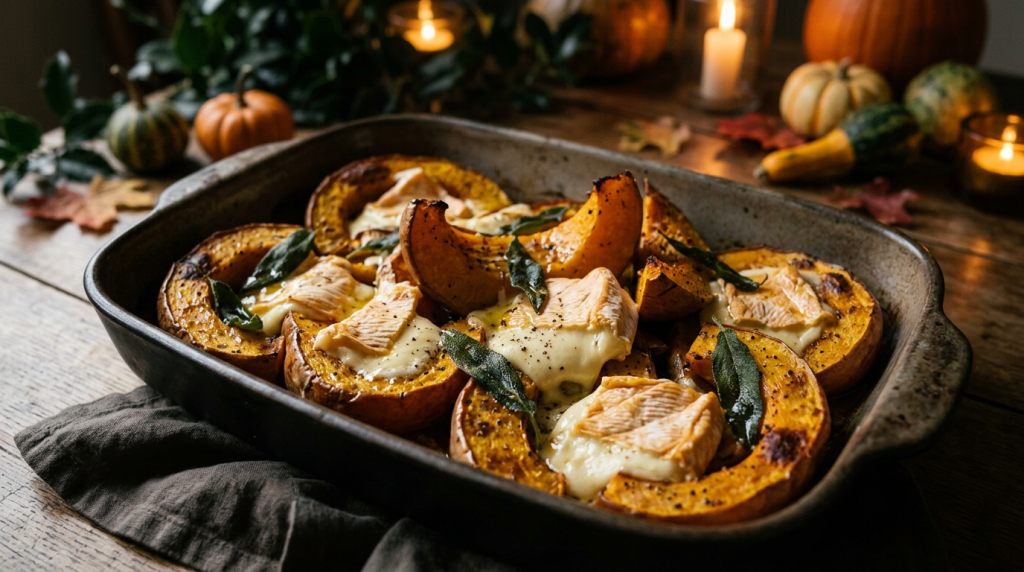
8. Roasted Irish Pumpkin with Milleens Dote, Crispy Sage & Caramelised Red Onion
Halloween wouldn’t be Halloween without pumpkins, but there’s far more to these colourful autumn vegetables than carving faces into them. Roasted until golden and tender, pumpkin develops a wonderful natural sweetness that makes it an excellent companion to rich, characterful Irish cheese.
This recipe brings together Irish-grown pumpkin, gently caramelised red onions, fragrant sage and Milleens Dote from County Cork. The result is a beautifully balanced autumn dish, with sweet roasted vegetables, savoury cheese and just enough freshness from the herbs.
It’s ideal for a Halloween dinner party, a relaxed gathering with friends or as a warm sharing dish at the centre of an autumn table.
Celebrating Irish Cheese: Milleens Dote, Co. Cork
Our featured cheese is Milleens Dote, produced by Milleens in County Cork.
Milleens is known for its washed-rind cheeses, which develop distinctive savoury aromas and rich, creamy flavours as they mature.
Milleens Dote brings that character to a smaller cheese, offering a creamy texture and a savoury depth that makes it particularly enjoyable with roasted vegetables.
The sweetness of pumpkin provides a natural contrast to the cheese’s stronger flavours, while caramelised red onion adds further sweetness and depth. Crispy sage brings an aromatic finish that helps balance the richness.
Ingredients
Serves 4 to 6 as a sharing dish
800g Irish-grown culinary pumpkin
150g Milleens Dote
2 medium red onions
40g Irish butter
2 tablespoons extra virgin olive oil
12 fresh sage leaves
1 tablespoon Irish honey
1 tablespoon apple cider vinegar
30g toasted pumpkin seeds
Sea salt and freshly ground black pepper
Method
Preheat your oven to 200°C (180°C fan).
Wash the pumpkin, remove the seeds and cut into wedges approximately 2–3cm thick. Peel if required for the variety you’re using.
Arrange the pumpkin on a large baking tray, drizzle with olive oil and season with salt and black pepper.
Roast for 30 to 40 minutes, turning halfway through, until tender and lightly caramelised.
Meanwhile, peel the red onions and slice them thinly.
Melt 20g of the Irish butter in a frying pan over low to medium heat. Add the onions and cook gently for 15 to 20 minutes, stirring occasionally, until softened and golden.
Stir the Irish honey and apple cider vinegar into the onions. Cook for another 2 minutes until glossy, then remove from the heat.
In a separate small frying pan, melt the remaining butter and add the sage leaves. Cook briefly until crisp, then transfer to kitchen paper.
Toast the pumpkin seeds in a dry frying pan for 2 to 3 minutes until fragrant.
Arrange the roasted pumpkin on an ovenproof serving platter and spoon the caramelised onions over the top.
Cut the Milleens Dote into small pieces and distribute evenly over the warm vegetables.
Return the dish to the oven for approximately 3 to 5 minutes, just long enough to gently soften the cheese.
Finish with crispy sage, toasted pumpkin seeds and a little freshly ground black pepper.
Serve immediately while the cheese is warm and the pumpkin is tender.
What to Drink
Wine Pairing: Gewürztraminer
An aromatic Gewürztraminer makes an interesting companion to the rich, washed-rind character of Milleens Dote.
Its floral aromas, ripe fruit flavours and gentle sweetness complement the caramelised pumpkin and onions, while providing a pleasant contrast to the cheese’s savoury intensity.
Choose a dry or lightly off-dry style depending on how sweet you prefer the finished dish.
Non-Alcoholic Pairing: Irish Sparkling Apple Juice
A chilled sparkling apple juice made from Irish-grown apples offers a refreshing balance to the richness of the cheese.
Its acidity helps cleanse the palate, while the natural orchard fruit flavours complement the sweet roasted pumpkin and caramelised onion.
Bringing Ireland to the Table
Ireland’s autumn harvest offers plenty of inspiration for seasonal cooking, particularly when it comes to pumpkins, squash and root vegetables.
Irish growers such as McNally Family Farm in North County Dublin help showcase the range of seasonal vegetables that can be grown here.
For this recipe, choose an Irish-grown culinary pumpkin rather than a decorative carving variety. Culinary pumpkins generally have firmer, sweeter flesh and produce better results when roasted.
Milleens Dote adds another distinctly Irish element, representing the cheesemaking traditions of County Cork and the distinctive flavours of Irish washed-rind cheese.
Together with Irish butter, seasonal vegetables and fresh herbs, this dish brings the colours and flavours of the Irish autumn harvest to the table.
Discover Milleens Dote at Cheese.ie and give your Halloween gathering a delicious taste of Ireland.
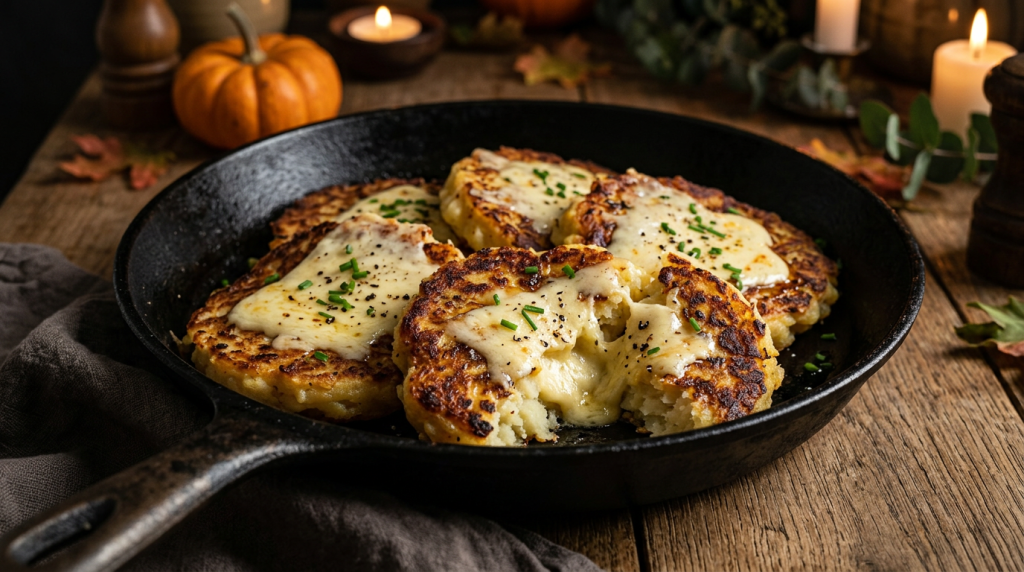
9. Crispy Irish Potato Cakes with Toonsbridge Buffalo Cheddar & Fresh Chives
Few ingredients are more closely associated with Irish cooking than the humble potato. And when you combine golden, buttery potato cakes with rich Irish cheese, you have something that’s difficult to resist.
These crispy potato cakes are golden on the outside, soft and fluffy in the middle, with melted Toonsbridge Buffalo Cheddar bringing a delicious savoury richness.
They’re ideal for a Halloween gathering, a relaxed autumn brunch or as a warm sharing dish when friends come over. Make them smaller for party bites or serve larger portions with a fresh seasonal salad.
Celebrating Irish Cheese: Toonsbridge Buffalo Cheddar, Co. Cork
Our featured cheese is Toonsbridge Buffalo Cheddar, produced by Toonsbridge Dairy in County Cork.
Made using buffalo milk, this Irish cheese offers a rich, creamy character with the savoury depth associated with Cheddar-style cheese.
Buffalo milk’s natural richness makes it particularly well suited to a comforting potato dish.
The mild, earthy flavour of Irish potatoes allows the cheese to stand out, while fresh chives bring a delicate onion flavour that balances the richness.
Cooking the cakes in Irish butter creates a golden crust that contrasts beautifully with their soft, cheesy centre.
Ingredients
Makes approximately 12 small potato cakes, serving 4 to 6
700g floury Irish-grown potatoes, such as Rooster or Kerr’s Pink
180g Toonsbridge Buffalo Cheddar, grated
40g Irish butter, plus extra for frying
1 Irish free-range egg
3 tablespoons plain flour, plus extra for dusting
3 tablespoons fresh chives, finely chopped
1 teaspoon wholegrain mustard
Sea salt and freshly ground black pepper
A little rapeseed oil for frying
Method
Peel the potatoes and cut them into evenly sized pieces.
Place in a saucepan of cold, lightly salted water and bring to the boil.
Simmer for approximately 15 to 20 minutes until tender.
Drain thoroughly and return the potatoes to the warm saucepan for 1 to 2 minutes, allowing excess moisture to evaporate.
Mash until smooth, then stir in 40g of Irish butter.
Allow the mashed potatoes to cool until just warm.
Add the grated Toonsbridge Buffalo Cheddar, beaten egg, flour, chopped chives, wholegrain mustard and a little black pepper.
Mix gently until combined. If the mixture feels too soft to shape, add a little more flour.
Divide into approximately 12 portions and shape into small, thick cakes.
Lightly dust each cake with flour and refrigerate for 15 to 20 minutes to help them hold their shape.
Heat a little Irish butter and rapeseed oil in a large frying pan over medium heat.
Fry the potato cakes in batches for approximately 3 to 4 minutes on each side, until golden and crisp.
Transfer to a warm serving platter and finish with additional fresh chives.
Serve immediately while the cheese is warm and the outside remains crisp.
What to Drink
Wine Pairing: Unoaked Chardonnay
A fresh, unoaked Chardonnay is a lovely match for these rich potato cakes.
Its crisp acidity balances the buttery potatoes and creamy cheese, while gentle citrus and orchard fruit notes provide a refreshing contrast.
Avoid heavily oaked styles, which can make the combination feel unnecessarily rich.
Non-Alcoholic Pairing: Irish Sparkling Apple Juice
A dry-style sparkling apple juice made with Irish-grown apples provides a refreshing contrast to the cheese and butter.
Its natural acidity cuts through the richness, while the bubbles help cleanse the palate between bites.
Bringing Ireland to the Table
Potatoes have been central to Irish food culture for generations, and they remain one of the country’s most recognisable ingredients.
Irish growers such as O’Shea Farms in County Kilkenny are part of the country’s established potato-growing industry, helping bring locally grown potatoes to Irish kitchens.
For this recipe, floury Irish potatoes are particularly important. Varieties such as Rooster and Kerr’s Pink produce a light, fluffy texture that works beautifully in potato cakes.
Paired with Toonsbridge Buffalo Cheddar from County Cork, Irish butter and fresh chives, the result is a comforting dish that celebrates familiar Irish ingredients in a wonderfully satisfying way.
It’s also an excellent way to use leftover mashed potatoes, making it a practical addition to your autumn cooking.
Discover Toonsbridge Buffalo Cheddar at Cheese.ie and bring a little extra Irish flavour to your Halloween table.
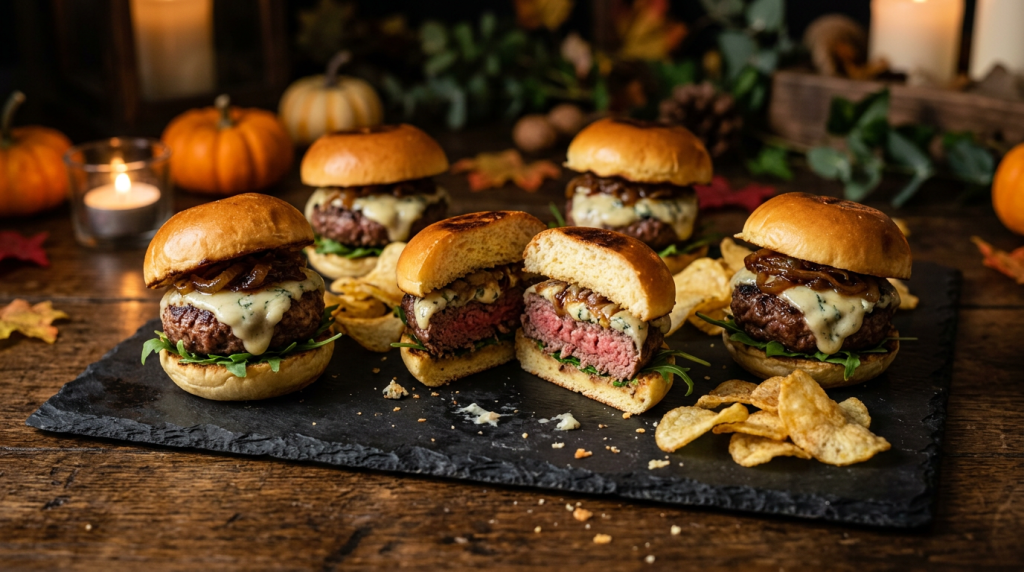
10. Irish Beef Sliders with Young Buck Blue Cheese, Caramelised Red Onions & Crisp Irish Apple Slaw
There are few things more satisfying than a really good Irish beef burger. Beautifully browned on the outside, juicy in the middle and packed with flavour, it’s one of those dishes that proves great ingredients don’t need much interference.
But add a generous helping of Young Buck blue cheese from County Down, slowly caramelised Irish red onions and a crisp apple slaw, and you’ve got something rather special.
These miniature burgers are made for autumn entertaining. They’re substantial enough to satisfy hungry guests, small enough to enjoy at a Halloween gathering and packed with ingredients that celebrate Ireland’s farmers, growers and cheesemakers.
This recipe brings together premium Irish beef from Butcher.ie, Young Buck blue cheese available from Cheese.ie, and the wonderful tradition of Irish apple growing, represented by producers such as The Apple Farm in County Tipperary.
It’s a proper celebration of Irish food, from the farm and orchard to the cheesemaker and butcher.
Celebrating Irish Cheese: Young Buck, County Down
Our featured cheese is Young Buck, produced by Mike’s Fancy Cheese in Newtownards, County Down.
Created by cheesemaker Michael Thomson, Young Buck is a raw cow’s milk blue cheese inspired by traditional Stilton cheesemaking. Matured for at least 12 weeks, it develops a creamy texture, distinctive blue veining and a rich, savoury flavour.
Young Buck has earned recognition at the Irish Cheese Awards, including an award in the blue cheese category in 2024.
It’s a cheese with enough character to stand alongside excellent Irish beef without disappearing into the background.
The richness of the beef complements the cheese’s creamy texture, while its salty, tangy notes contrast beautifully with sweet caramelised onions.
And then there’s the apple slaw. Crisp, fresh and slightly acidic, it brings everything together, cutting through the richness and making each bite as enjoyable as the first.
Ingredients
Makes 12 sliders, serving 4 to 6 people
For the Irish Beef Burgers
900g premium Irish beef mince from Butcher.ie, ideally containing approximately 15 to 20% fat
180g Young Buck blue cheese from Cheese.ie
12 small burger buns
1 tablespoon Irish rapeseed oil
20g Irish butter, for toasting the buns
Sea salt and freshly ground black pepper
For the Caramelised Red Onions
3 medium Irish-grown red onions
30g Irish butter
1 tablespoon Irish honey
1 tablespoon Irish apple cider vinegar
A pinch of sea salt
For the Crisp Irish Apple Slaw
2 crisp Irish-grown eating apples
150g Irish-grown white cabbage
1 medium Irish-grown carrot
2 tablespoons mayonnaise
1 tablespoon Irish apple cider vinegar
1 teaspoon wholegrain mustard
1 tablespoon fresh lemon juice
Freshly ground black pepper
Method
1. Slowly Caramelise the Onions
Peel the red onions and slice them thinly.
Melt the Irish butter in a large frying pan over low to medium heat. Add the onions with a small pinch of sea salt and cook gently for approximately 20 to 25 minutes.
Stir occasionally, allowing the onions to soften and develop a deep golden colour.
Don’t rush this stage. The natural sweetness that develops during slow cooking is an important part of the finished burger.
Once the onions are beautifully softened, add the Irish honey and apple cider vinegar.
Cook for another 2 to 3 minutes until glossy and lightly caramelised.
Remove from the heat and set aside.
2. Prepare the Irish Apple Slaw
Finely shred the white cabbage and grate the carrot.
Wash the apples, remove the cores and slice the flesh into thin matchsticks. Leaving the skins on adds colour and texture.
Toss the apple with the lemon juice to help prevent browning.
In a separate bowl, combine the mayonnaise, apple cider vinegar, wholegrain mustard and a little freshly ground black pepper.
Add the cabbage, carrot and apple, then gently fold everything together until lightly coated.
The slaw should remain crisp and fresh rather than heavily dressed.
Refrigerate until needed, ideally preparing it shortly before serving.
3. Shape the Irish Beef Burgers
Divide the Irish beef mince into 12 equal portions of approximately 75g each.
Gently shape each portion into a small burger patty, making it slightly wider than the buns to allow for shrinkage during cooking.
Avoid pressing or working the meat too much. A light touch helps keep the burgers tender and juicy.
Place the patties on a tray and refrigerate for approximately 15 minutes.
Season generously with sea salt and freshly ground black pepper just before cooking.
4. Cook the Burgers
Heat a large heavy-based frying pan or griddle over medium-high heat.
Add a little Irish rapeseed oil.
Cook the burger patties in batches, allowing them to develop a deep golden crust before turning.
Depending on thickness, this will take approximately 3 to 4 minutes on each side. Check that the centre of each minced beef burger reaches 75°C.
During the final minute of cooking, place approximately 15g of Young Buck blue cheese on top of each patty.
Cover the pan briefly with a lid to encourage the cheese to soften over the hot beef.
Remove from the heat and allow the burgers to rest briefly.
5. Toast the Buns
Slice the miniature burger buns in half.
Lightly butter the cut surfaces and toast in a warm frying pan until golden.
This adds flavour and creates a slightly crisp surface that helps prevent the buns from becoming soggy.
6. Assemble the Sliders
Place a spoonful of caramelised red onions onto the bottom half of each toasted bun.
Add a hot Irish beef patty topped with softened Young Buck blue cheese.
Finish with a small helping of crisp Irish apple slaw.
Place the top bun in position and secure with a wooden skewer if serving as party food.
Arrange the sliders on a large wooden serving board and bring them to the table while still warm.
What to Drink
Wine Pairing: Argentinian Malbec
A fruit-forward Malbec makes an excellent companion to these rich, savoury sliders.
Its dark berry flavours complement the Irish beef, while its tannins provide structure against the creamy intensity of Young Buck.
Look for a Malbec with good freshness and ripe fruit rather than a heavily oaked style.
The wine’s natural fruitiness also works beautifully alongside the caramelised onions.
Non-Alcoholic Pairing: Irish Apple & Blackcurrant Drink
A chilled Irish apple and blackcurrant drink offers a refreshing alternative.
The apple’s acidity cuts through the richness of the beef and cheese, while the blackcurrant brings a deeper fruit flavour that stands up to the bold character of Young Buck.
The Apple Farm in County Tipperary produces apple and blackcurrant juice, making it a particularly fitting Irish producer to feature alongside this recipe.
Serve well chilled in small glasses, allowing the natural fruit flavours to complement the savoury food.
Bringing Ireland to the Table
What makes this recipe special isn’t simply the combination of beef, cheese and apples. It’s the opportunity to celebrate the people producing exceptional food across Ireland.
Mike’s Fancy Cheese, County Down
In Newtownards, County Down, cheesemaker Michael Thomson has helped demonstrate the potential of traditional blue cheesemaking in Ireland.
Young Buck is a distinctive example of that work, combining traditional inspiration with the character of locally produced farmhouse cheese.
Its rich, savoury flavour transforms these miniature burgers from ordinary party food into something memorable.
Butcher.ie, Premium Irish Beef
Good burgers begin with good beef.
Butcher.ie specialises in bringing Irish meat directly to customers, making it easier to enjoy quality beef at home.
For these sliders, mince with approximately 15 to 20% fat provides the ideal balance of flavour, tenderness and juiciness.
There’s no need to overload the beef with spices or complicated seasonings. A little sea salt, freshly ground black pepper and a properly heated pan allow the natural flavour to shine.
The Apple Farm, County Tipperary
Ireland’s apple-growing tradition deserves just as much attention as its meat and dairy industries.
The Apple Farm in County Tipperary is a family-run fruit farm known for growing apples and producing a range of fruit juices and other apple-based products.
Their apple and blackcurrant juice makes a wonderful non-alcoholic accompaniment to these sliders.
For the slaw itself, choose fresh Irish-grown eating apples. If sourcing directly from an orchard, ask for a crisp variety with a good balance of sweetness and acidity.
The contrast between fresh Irish apples and rich blue cheese is one of the highlights of this recipe.
Celebrating Irish Vegetable Growers
The red onions, cabbage and carrots may seem like supporting ingredients, but they are essential to the finished dish.
Ireland’s vegetable growers supply the seasonal produce that brings freshness, colour and flavour to our kitchens.
Look for Irish-grown vegetables when shopping, and check the country of origin rather than assuming all produce sold locally was grown here.
Caramelised onions bring sweetness, cabbage adds crunch and fresh carrots provide colour and texture.
Together, they demonstrate how simple vegetables can elevate a dish built around premium Irish beef and farmhouse cheese.
A Halloween Table That Celebrates Irish Producers
Halloween is a wonderful excuse to gather friends and family around good food, but it’s also an opportunity to appreciate the ingredients being produced on our doorstep.
From the beef supplied by Butcher.ie to Young Buck crafted by Mike’s Fancy Cheese in County Down, and the orchard produce of The Apple Farm in County Tipperary, these sliders celebrate the diversity of Irish food production.
Behind every ingredient is a farmer, grower, cheesemaker or independent food business contributing to Ireland’s food culture.
And that’s what makes cooking with Irish produce so rewarding.
Discover Young Buck blue cheese at Cheese.ie, shop premium Irish beef at Butcher.ie, and explore the fruit juices and orchard products from The Apple Farm in County Tipperary.
A proper Irish beef burger, exceptional farmhouse cheese and fresh orchard flavours. Everything you need for a delicious Halloween gathering.
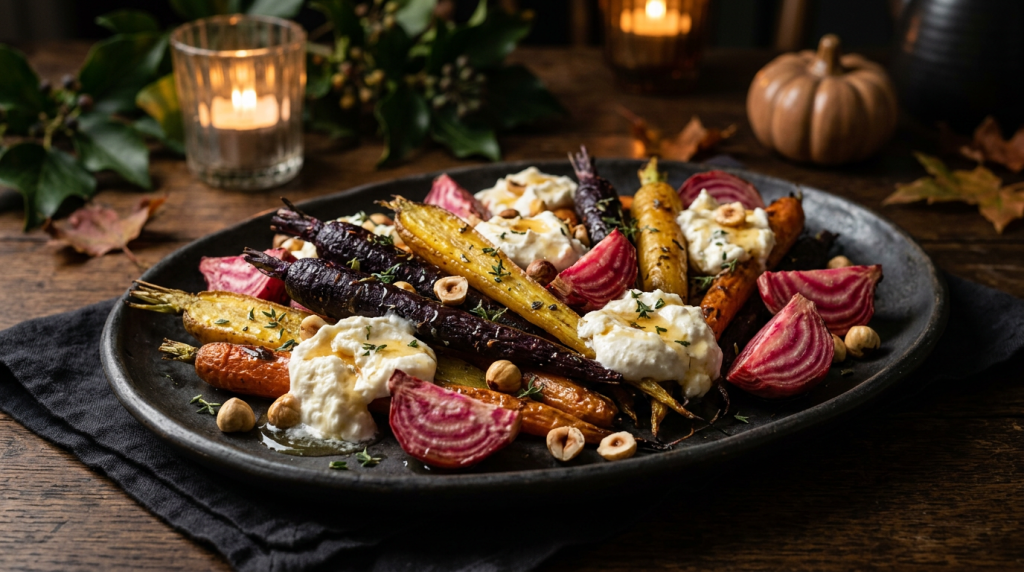
11. Roasted Irish Rainbow Carrots & Candy Beetroot with St. Tola Goat’s Cheese, Longford Honey & Toasted Hazelnuts
Autumn is one of the most colourful times of year in the Irish countryside. The fields and hedgerows are changing colour, orchards are finishing their harvests, and Irish vegetable growers are bringing some remarkable seasonal produce to market.
This recipe celebrates that harvest with rainbow carrots and candy beetroot from Glenaragreen in County Dublin, creamy St. Tola goat’s cheese from County Clare, and raw Irish honey from The Farmhouse Bees & Trees in County Longford.
Roasting brings out the natural sweetness of the vegetables, while the goat’s cheese provides a fresh, tangy contrast. Toasted hazelnuts add crunch, and a warm honey and mustard dressing ties everything together.
The result is a colourful, comforting dish that looks beautiful on a Halloween table and celebrates three very different Irish food producers.
Serve it as a warm starter, alongside a Sunday roast or as part of a larger autumn sharing feast.
Celebrating Irish Cheese: St. Tola, County Clare
Our featured cheese is St. Tola Original, produced by St. Tola Goat Cheese in Inagh, County Clare.
St. Tola’s story began in the 1980s, when Meg and Derrick Gordon established the cheesemaking business. It was later developed by cheesemaker Siobhán Ní Ghairbhith, who has helped establish St. Tola as one of Ireland’s recognised farmhouse goat’s cheese producers.
Made from goat’s milk, St. Tola Original is a soft, creamy cheese with a fresh, gently tangy flavour.
That acidity makes it a particularly good match for roasted root vegetables. As carrots and beetroot cook, their natural sugars become more concentrated, creating a sweetness that contrasts beautifully with the cheese.
The warm honey dressing adds another layer of flavour, while toasted hazelnuts provide a satisfying crunch.
Rather than melting the cheese completely, this recipe allows it to soften gently against the warm vegetables, preserving its distinctive texture and flavour.
Ingredients
Serves 4 to 6
For the Roasted Vegetables
500g Irish-grown rainbow carrots, preferably from Glenaragreen
400g Irish-grown mixed beetroot, including candy-striped and golden varieties where available
2 tablespoons Irish rapeseed oil
1 tablespoon raw Irish summer honey from The Farmhouse Bees & Trees
4 sprigs fresh thyme
Sea salt and freshly ground black pepper
For the Salad
180g St. Tola Original goat’s cheese from Cheese.ie
70g whole hazelnuts
80g fresh Irish-grown salad leaves, such as rocket or baby spinach
1 small Irish-grown red onion, thinly sliced
A small handful of fresh flat-leaf parsley
For the Warm Longford Honey Dressing
2 tablespoons Irish rapeseed oil
1 tablespoon raw Irish summer honey from The Farmhouse Bees & Trees
1 tablespoon Irish apple cider vinegar
1 teaspoon wholegrain mustard
1 teaspoon fresh lemon juice
A pinch of sea salt
Freshly ground black pepper
Method
1. Prepare the Autumn Vegetables
Preheat your oven to 200°C (180°C fan).
Wash the rainbow carrots thoroughly. Leave smaller carrots whole and halve or quarter larger ones lengthways.
Wash and peel the beetroot, then cut into evenly sized wedges approximately 2cm thick.
Keep the different beetroot varieties separate during preparation to preserve their individual colours.
Arrange the carrots and beetroot on separate baking trays.
Drizzle with Irish rapeseed oil, season with sea salt and freshly ground black pepper, and scatter over the fresh thyme.
Drizzle the honey lightly over the vegetables.
2. Roast Until Golden
Place the trays in the oven and roast for approximately 30 to 40 minutes, turning halfway through.
The carrots should become tender with lightly caramelised edges, while the beetroot should soften and develop a deeper sweetness.
Check the vegetables with the tip of a knife, as cooking times will vary depending on their size.
Remove from the oven and allow to cool slightly.
3. Toast the Hazelnuts
While the vegetables roast, place the hazelnuts in a dry frying pan over medium heat.
Toast for approximately 4 to 5 minutes, shaking the pan occasionally, until fragrant and lightly golden.
Allow to cool, then roughly chop.
Toasting the nuts enhances their flavour and gives them a pleasant crunch that contrasts with the creamy goat’s cheese.
4. Prepare the Warm Longford Honey Dressing
In a small saucepan, combine the Irish rapeseed oil, raw Irish honey, apple cider vinegar, wholegrain mustard and lemon juice.
Warm gently over low heat, stirring until the honey has dissolved and the ingredients are combined.
Do not allow the dressing to boil.
Season with a little sea salt and freshly ground black pepper.
The dressing should have a balance of sweetness, acidity and gentle mustard warmth.
5. Assemble the Salad
Arrange the fresh salad leaves across a large serving platter.
Add the warm roasted rainbow carrots and candy beetroot, distributing the different colours evenly.
Scatter over the thinly sliced red onion.
Break the St. Tola goat’s cheese into generous pieces and place them between the vegetables.
The warmth of the roasted roots will gently soften the cheese without completely melting it.
Sprinkle over the toasted hazelnuts and fresh parsley.
6. Finish and Serve
Spoon the warm Longford honey dressing over the salad immediately before serving.
Finish with a little extra freshly ground black pepper.
Bring the platter to the table while the vegetables are still warm and the cheese is beginning to soften.
What to Drink
Wine Pairing: Sauvignon Blanc
A fresh, dry Sauvignon Blanc is a natural companion to St. Tola goat’s cheese.
Its lively acidity complements the cheese’s tangy character, while citrus and herbal notes work particularly well with the roasted vegetables, fresh parsley and mustard dressing.
Choose a style with good freshness rather than one dominated by tropical fruit flavours.
Non-Alcoholic Pairing: Irish Sparkling Elderflower
A lightly sparkling elderflower drink provides a refreshing contrast to the roasted vegetables and creamy goat’s cheese.
Its floral character complements the honey dressing, while citrus acidity keeps the pairing fresh.
Choose an Irish-made elderflower drink with restrained sweetness, checking the origin of its ingredients if you want a drink made specifically from Irish-grown produce.
Bringing Ireland to the Table
What makes this dish particularly special is the opportunity to celebrate three independent Irish producers, each contributing something distinctive.
From the colourful vegetables grown in County Dublin to the farmhouse goat’s cheese made in County Clare and the honey harvested in County Longford, every ingredient has a story worth telling.
Glenaragreen, County Dublin
Situated near Brittas in County Dublin, Glenaragreen is a family-run organic vegetable farm growing a colourful range of seasonal produce.
The farm is particularly interesting for its rainbow carrots and candy beetroot, including varieties that bring striking natural colours to the plate.
These vegetables offer more than visual appeal. Different carrot and beetroot varieties provide subtle differences in sweetness, earthiness and texture.
Roasting concentrates their natural sugars, creating a wonderful contrast with the fresh tang of St. Tola goat’s cheese.
For this recipe, look for Glenaragreen’s seasonal rainbow carrots and mixed beetroot when available.
Their colours make the finished dish especially appealing for a Halloween gathering.
Explore the seasonal organic vegetables grown by Glenaragreen in County Dublin.
St. Tola Goat Cheese, County Clare
Based in Inagh, County Clare, St. Tola Goat Cheese has played an important role in the development of Ireland’s farmhouse cheese industry.
Under the stewardship of Siobhán Ní Ghairbhith, the business has helped introduce Irish goat’s cheese to a wider audience.
St. Tola Original provides the creamy, tangy element that makes this salad more than simply a platter of roasted vegetables.
Its freshness balances the sweetness of the roots, while its soft texture contrasts beautifully with the toasted hazelnuts.
This is exactly the kind of Irish farmhouse cheese that deserves to be celebrated, both for its flavour and the cheesemaking knowledge behind it.
Discover St. Tola Original at Cheese.ie.
The Farmhouse Bees & Trees, County Longford
Honey is often treated as a simple sweetener, but genuine Irish honey deserves recognition as a remarkable agricultural product in its own right.
In County Longford, Pat and Fiona McCormack of The Farmhouse Bees & Trees produce raw Irish honey, with a focus on native Irish honeybees and the environment that supports them.
Their honey reflects the flowers and plants visited by their bees throughout the seasons, with varieties including spring, summer, heather and ivy honey.
For this recipe, their summer honey is a particularly lovely choice.
Its floral sweetness complements the roasted rainbow carrots and candy beetroot, while balancing the fresh, tangy character of St. Tola goat’s cheese.
We use it twice: first to lightly glaze the vegetables as they roast, and again in the warm honey and mustard dressing.
That allows the honey to contribute real flavour rather than simply appearing as a finishing garnish.
It’s also an opportunity to recognise the important role of Irish beekeepers in supporting healthy bee populations and the wider natural environment.
Discover the raw Irish honey produced by The Farmhouse Bees & Trees in County Longford.
A Colourful Celebration of Irish Autumn
There’s something wonderful about a table filled with the natural colours of the Irish harvest.
Golden carrots, deep purple roots, candy-striped beetroot, creamy white goat’s cheese and fresh green herbs create a dish that looks every bit as good as it tastes.
But the real story is about the people behind the ingredients.
Glenaragreen in County Dublin brings the vegetables.
St. Tola in County Clare brings the farmhouse cheese.
The Farmhouse Bees & Trees in County Longford brings the raw Irish honey.
Three independent Irish producers, three different areas of food production and one dish that celebrates the best of the season.
Whether you’re preparing a Halloween dinner party, gathering friends around the table or simply looking for a delicious way to enjoy Irish-grown vegetables, this recipe brings together flavour, colour and craftsmanship.
Shop St. Tola Original at Cheese.ie, discover Glenaragreen’s seasonal vegetables at glenaragreen.ie, and explore the raw Irish honey produced by The Farmhouse Bees & Trees at thefarmhouse.ie.
A delicious celebration of Irish growers, cheesemakers and beekeepers, all brought together on one autumn table.
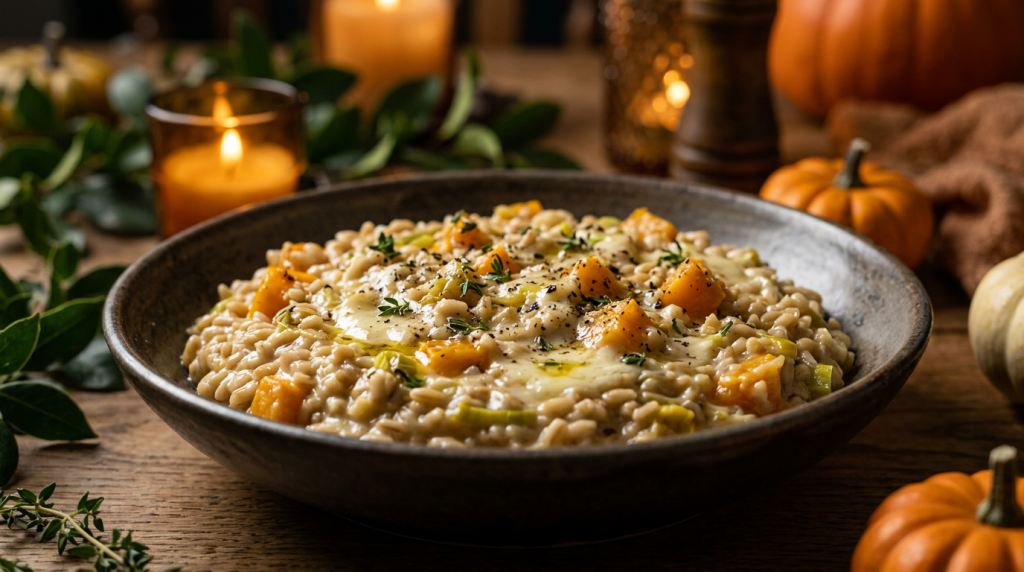
12. Roasted Irish Autumn Squash with Lost Valley Sobhriste, Buttery Leeks & Toasted Oat Groats
There’s something wonderful about bringing a beautifully roasted squash to the table on a cold autumn evening. Golden, tender and naturally sweet, it provides the perfect setting for a generous helping of exceptional Irish farmhouse cheese.
For the final recipe in our Halloween collection, we’re celebrating Sobhriste from The Lost Valley Dairy & Creamery in West Cork, a distinctive cow’s milk cheese with a gently tangy, savoury character and a traditional crumbly texture.
Here, Sobhriste takes centre stage, generously layered over roasted Irish squash and folded through buttery leeks and nutty oat groats. As the dish finishes in the oven, the cheese softens, bringing richness and depth to every mouthful.
Fresh thyme, toasted pumpkin seeds and a little Irish butter complete the dish.
It’s a substantial vegetarian main course, perfect for a Halloween dinner party or an autumn gathering with friends and family.
Celebrating Irish Cheese: Lost Valley Sobhriste, County Cork
Our featured cheese is Sobhriste, produced by The Lost Valley Dairy & Creamery near Inchigeelagh in West Cork.
Behind the cheese are Mike Parle and Darcie Mayland, who have developed a small farming and cheesemaking business rooted in the landscape of West Cork.
Their approach places particular importance on the milk, the animals and the traditional skills involved in transforming that milk into farmhouse cheese.
The dairy works with raw cow’s milk and has developed its own local starter cultures, reflecting an interest in producing cheese with a genuine connection to its surroundings.
Sobhriste is a traditional-style crumbly cheese, influenced by cheeses such as Lancashire and Caerphilly.
It has a gently tangy, savoury character and a texture that softens beautifully when warmed.
Unlike a very mild cheese that might disappear into a vegetable dish, Sobhriste brings a distinctive flavour that stands up to the sweetness of roasted squash.
Its slight acidity balances the buttery leeks, while its savoury depth complements the nutty flavour of whole oat groats.
The key to this recipe is using the cheese generously.
Rather than treating it as a garnish, Sobhriste is incorporated into the warm filling and scattered across the top, allowing its flavour to carry through the entire dish.
Ingredients
Serves 4 as a main course
For the Roasted Squash
2 medium Irish-grown culinary squashes, approximately 800g to 1kg each
2 tablespoons Irish rapeseed oil
1 teaspoon fresh thyme leaves
Sea salt and freshly ground black pepper
For the Sobhriste Cheese Filling
250g Lost Valley Sobhriste cheese from Cheese.ie
120g whole oat groats
2 medium Irish-grown leeks
1 small Irish-grown onion
2 cloves garlic, finely chopped
40g Irish butter
100 to 150ml hot vegetable stock
1 teaspoon wholegrain mustard
2 tablespoons finely chopped flat-leaf parsley
1 teaspoon fresh thyme leaves
Freshly ground black pepper
For the Crispy Topping
40g pumpkin seeds
20g Irish butter
30g fresh breadcrumbs
6 fresh thyme sprigs
Method
1. Roast the Irish Squash
Preheat your oven to 200°C (180°C fan).
Wash the squash thoroughly and cut each one in half lengthways.
Scoop out the seeds and stringy centre, leaving a generous hollow for the filling.
Arrange the squash halves cut side up on a large baking tray.
Drizzle with Irish rapeseed oil and season with sea salt, freshly ground black pepper and thyme.
Roast for approximately 35 to 45 minutes, depending on their size, until the flesh is tender but the squash halves still hold their shape.
The edges should develop a little colour, bringing out the vegetable’s natural sweetness.
2. Cook the Oat Groats
Rinse the oat groats thoroughly under cold running water.
Place in a saucepan with approximately 500ml of fresh water.
Bring to the boil, then reduce to a gentle simmer.
Cook for approximately 45 to 60 minutes, or according to the packet instructions, until tender but retaining a pleasant chew.
Drain any remaining water and set aside.
The oat groats should have a nutty flavour and retain their shape, providing texture without overpowering the cheese.
3. Prepare the Buttery Leeks
Trim the leeks, remove any tough outer leaves and wash thoroughly.
Slice into thin rounds.
Finely chop the onion and garlic.
Melt 40g of Irish butter in a large frying pan over medium heat.
Add the onion and cook gently for approximately 5 minutes until softened.
Add the sliced leeks and continue cooking for another 8 to 10 minutes.
Stir occasionally, allowing the leeks to become soft and naturally sweet without browning excessively.
Add the garlic and cook for another minute.
4. Prepare the Warm Filling
Stir the cooked oat groats into the buttery leeks and onions.
Add the wholegrain mustard, fresh thyme and chopped parsley.
Pour in approximately 100ml of hot vegetable stock and cook gently for 3 to 4 minutes.
The mixture should be moist and lightly creamy, but not watery.
Add a little more stock if necessary.
Remove the pan from the heat.
5. Add the Lost Valley Sobhriste
Crumble approximately 150g of Sobhriste into the warm leek and oat mixture.
Fold gently through the filling, allowing the cheese to soften against the warm ingredients.
You want small pockets of cheese throughout the mixture rather than a completely smooth sauce.
Taste and adjust the seasoning, remembering that the cheese contributes its own savoury flavour.
The filling should taste distinctly of Sobhriste, with the leeks and oats providing a gentle background.
6. Fill the Roasted Squash
Remove the roasted squash from the oven.
If the cavities are small, carefully scoop out a little of the cooked flesh, leaving a sturdy border so each half retains its shape.
Roughly chop the removed squash and fold it into the warm filling.
Divide the mixture evenly between the four squash halves.
Spoon generously into each cavity, allowing the filling to rise slightly above the edges.
Crumble the remaining 100g of Sobhriste across the top, ensuring each portion has a generous layer of cheese.
Return to the oven for approximately 12 to 15 minutes until the filling is piping hot and the cheese has softened and begun to colour lightly.
7. Prepare the Crispy Topping
While the squash finishes baking, melt the remaining butter in a small frying pan.
Add the pumpkin seeds and toast gently for approximately 2 minutes.
Stir in the breadcrumbs and cook until golden.
Add the thyme sprigs and cook briefly until fragrant and lightly crisp.
Remove from the heat.
8. Finish and Serve
Transfer the roasted squash halves to a large serving platter.
Scatter the toasted pumpkin seeds, buttery breadcrumbs and crispy thyme over the top.
Finish with a little freshly ground black pepper.
Serve immediately while the Sobhriste is warm and soft.
For a particularly attractive presentation, bring the squash halves to the table whole and allow guests to enjoy the generous layer of cheese alongside the sweet roasted flesh.
Why These Ingredients Work Together
The success of this dish comes from balancing the distinctive character of Sobhriste with ingredients that complement rather than compete with it.
Roasted Irish squash brings natural sweetness, providing a gentle contrast to the cheese’s tangy, savoury flavour.
Buttery Irish leeks add a delicate onion sweetness and a soft texture that complements the crumbly cheese.
Whole oat groats introduce a nutty flavour and satisfying chew, giving the filling substance without making it excessively heavy.
Fresh thyme brings an aromatic, earthy note that works particularly well with both the squash and the cheese.
Toasted pumpkin seeds provide crunch, creating a contrast with the tender vegetables and softened Sobhriste.
Together, these ingredients allow the cheese to remain the defining flavour of the dish.
What to Drink
Wine Pairing: White Burgundy
A lightly oaked Chardonnay from Burgundy is a lovely companion to Sobhriste.
Its rounded texture complements the buttery leeks and softened cheese, while its refreshing acidity balances the sweetness of the roasted squash.
Subtle orchard fruit and nutty notes also work beautifully with the oat groats and toasted pumpkin seeds.
Choose a fresh, balanced style rather than one dominated by heavy oak.
Non-Alcoholic Pairing: Dry Irish Sparkling Apple Juice
A dry sparkling apple juice made with Irish-grown apples provides a refreshing contrast to the rich cheese filling.
The natural acidity helps cleanse the palate, while the orchard fruit flavours complement the sweetness of the roasted squash.
Serve well chilled in wine glasses.
Bringing Ireland to the Table
At the heart of this recipe is The Lost Valley Dairy & Creamery in County Cork, where Mike Parle and Darcie Mayland produce distinctive farmhouse cheeses using traditional techniques and an approach closely connected to their farm.
Sobhriste demonstrates the character that independent Irish cheesemakers can bring to the table, offering something very different from mass-produced cheese.
The supporting ingredients also give us an opportunity to recognise other Irish food producers.
Moyleabbey Organic Farm in County Kildare, run by Liam Ryan, has experience growing pumpkins and winter squash, making it a fitting example of Ireland’s seasonal vegetable production.
Shackleton’s Milling in County Meath supplies whole oat groats, which provide the nutty texture in our filling. The Irish growing origin of those particular oats has not been confirmed, so we are recognising the Irish milling business rather than claiming the grain itself was grown here.
Together, the cheese, seasonal vegetables and traditional grains create a dish that reflects the variety of ingredients available to Irish cooks.
But it is Sobhriste that makes this recipe special.
Its tangy flavour, crumbly texture and savoury richness transform simple roasted squash into a memorable autumn main course.
Discover Lost Valley Sobhriste at Cheese.ie
The final recipe in our Irish Halloween Table is a celebration of one of West Cork’s distinctive farmhouse cheeses.
Made by The Lost Valley Dairy & Creamery, Sobhriste brings character, flavour and craftsmanship to a dish built around the natural sweetness of Ireland’s autumn harvest.
Whether you’re hosting a Halloween dinner party, preparing a family meal or discovering Irish farmhouse cheese for the first time, this recipe is a wonderful way to enjoy Sobhriste.
Discover Lost Valley Sobhriste at Cheese.ie and explore our collection of exceptional Irish farmhouse cheeses.
Twelve seasonal recipes. Twelve featured Irish cheeses. A celebration of the cheesemakers and producers who make Irish food worth gathering for.
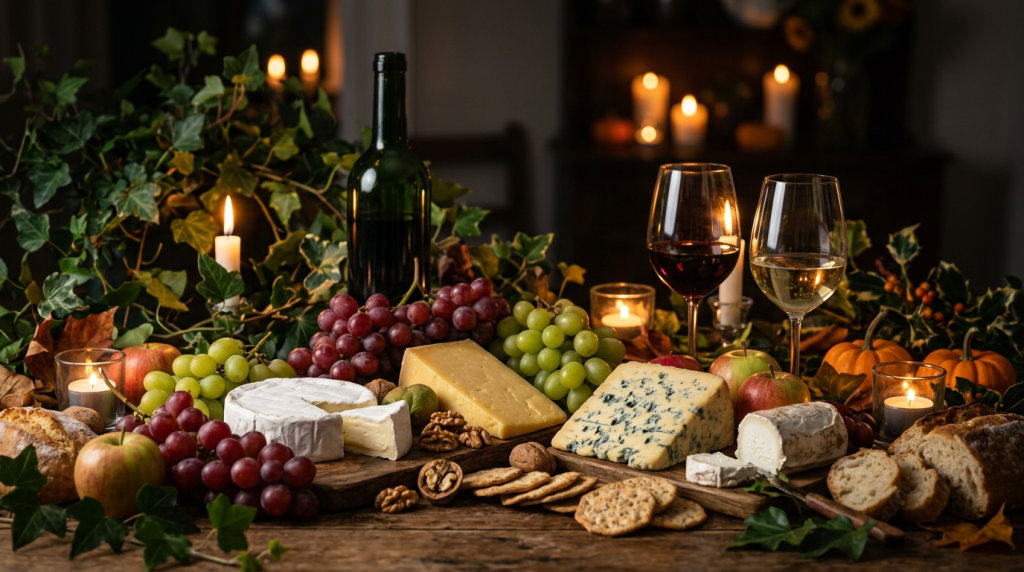
A Celebration of Irish Food, From Ireland’s Producers to Your Table
The October bank holiday weekend and Halloween are the perfect excuse to gather friends and family around the table, enjoy exceptional food and make the most of Ireland’s autumn harvest.
Halloween has deep roots in Irish tradition. Long before the costumes and decorations, Samhain marked the end of the harvest season and the beginning of winter. It was a time for gathering, sharing food and celebrating the changing seasons.
And what better way to enjoy the long weekend than with the wonderful food being produced across our island?
Throughout these twelve recipes, we’ve explored the remarkable variety of Irish artisan cheeses, from rich, characterful blues and creamy goat’s cheeses to beautifully matured hard cheeses and distinctive washed-rind varieties.
But the story goes far beyond cheese.
We’ve celebrated the farmers raising Irish cattle, the growers harvesting colourful autumn vegetables, the orchard owners producing beautiful Irish apples and the beekeepers caring for their hives and producing local honey.
Behind every great ingredient is someone who has dedicated their time, knowledge and hard work to producing it.
These are the people who make Ireland’s food culture so special.
Discover the People Behind Your Food
At Cheese.ie, we believe exceptional food deserves recognition, and so do the people who produce it.
Across Ireland, passionate cheesemakers are creating extraordinary artisan cheeses, combining traditional skills, carefully selected ingredients and years of experience to develop flavours that are entirely their own.
Some are small family businesses, while others have spent generations perfecting their craft. What unites them is the care and dedication that goes into every cheese they produce.
And they’re part of a much bigger Irish food story.
From the organic growers bringing fresh seasonal vegetables to our kitchens to the orchard owners harvesting apples and the beekeepers producing beautiful Irish honey, there is an extraordinary community of food producers worth celebrating.
By choosing Irish-grown ingredients and supporting independent Irish producers, we’re helping to sustain local farms, family businesses and the traditional skills that make our food culture so distinctive.
These are the people whose work deserves to be recognised, enjoyed and supported.
Make the Most of the October Long Weekend
With an extra day to enjoy, the October bank holiday weekend is a wonderful opportunity to spend a little more time in the kitchen.
Choose a recipe you’ve never tried before, cook with seasonal Irish-grown vegetables, discover the flavours of a new artisan cheese and invite friends or family over for a relaxed Halloween supper.
You don’t need an elaborate dinner party to enjoy great food. A few exceptional ingredients, prepared simply and shared with good company, can be every bit as memorable.
These twelve recipes offer inspiration for everything from Halloween party food and comforting family meals to generous sharing dishes for a long weekend gathering.
And with every recipe, there’s an opportunity to appreciate the farmers, growers and cheesemakers whose hard work brings those ingredients to our tables.
Keep the Irish Food Story Going
Ireland has an extraordinary community of independent food producers, from artisan cheesemakers and organic vegetable growers to orchard owners, beekeepers and farmers raising exceptional Irish meat.
We encourage you to discover their stories, seek out their produce and choose Irish-grown ingredients whenever possible.
Because supporting Irish food isn’t simply about buying something produced locally.
It’s about recognising the skill, care and dedication that goes into making it, supporting the families and businesses behind it and helping to ensure those traditions continue for generations to come.
And when it comes to the cheese, we’ve made discovering something exceptional easy.
At Cheese.ie, you can explore and order the artisan cheeses featured throughout this collection, each selected for its distinctive character, quality and the passion of the people who make it.
Here’s to Good Food and Good Company
However you’re spending the October bank holiday weekend, we hope these twelve recipes inspire you to try something new.
Choose an artisan cheese you’ve never tasted before. Experiment with an Irish-grown seasonal vegetable. Discover a local producer whose story you haven’t heard.
Whether you’re preparing one special dish or planning an entire Halloween feast, let exceptional Irish ingredients and beautifully crafted cheese take centre stage.
And most importantly, enjoy the food and the company around your table.
Discover the twelve featured cheeses and explore our collection of exceptional artisan cheeses at Cheese.ie. Order your favourites and bring the flavours of Ireland’s autumn harvest to your table this Halloween.
From all of us at Cheese.ie, have a wonderful October bank holiday weekend and a very Happy Halloween!